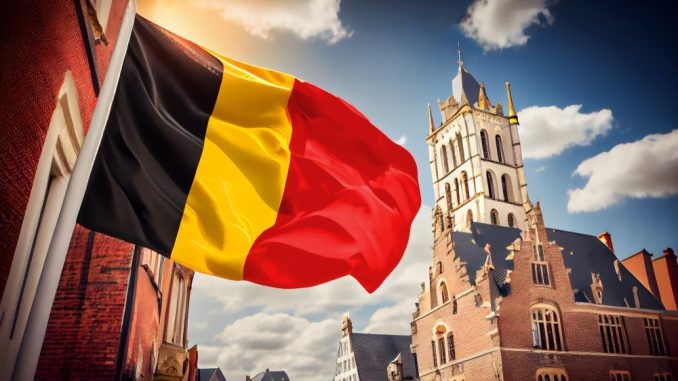
Moving to live in another country is never easy but, for those who are serious about giving it go, the experience can be richly rewarding.
That is all the more so if you are able to commit to your new home/country for the long term.
For those who might choose to live and work in Belgium, a word of warning: applying for long term residency is no easy process.
As with much else in Belgium, you have to be ready to face layer upon layer of red tape. It can be very tiring, in every sense, and it helps hugely if you have a decent command of French or Dutch, the two main languages in Belgium.
The good news, though, is that if you are successful in your application, it could be well worth the effort because, it was reported just this week,that the Belgian passport has been ranked as the fourth most powerful in the world.
It grants its holders visa-free or visa-on-arrival access to 185 countries, according to the latest global passport index.Belgium shares fourth position with nine other countries, all European: Austria, France, Finland, Germany, Greece, Ireland, Italy, the Netherlands, and Norway.
So, how to go about it all?
Well,if you want access to the Belgian labour market, socialsecurity, reside here or simply move freely about on the Belgian territory, you will need to officially register and thus fulfill a number of formalities. The type of formalities will depend on your civil status, the purpose and the term of your stay, and are taken care of by several Belgian administrations such as the municipality (“commune / gemeente”) of your residence in Belgium or the Immigration Office (“Office des Etrangers / Dienst Vreemdelingenzaken”).
As said, take into account that the procedure can be long and complex. Be sure to prepare well in time before arriving in Brussels and … be patient.
Once you arrive in Belgium, contact your municipality’s foreign affairs department (“Service étranger / vreemedlingenzaken”) to make an appointment for your residence formalities (select your residence commune below).
First, the process for “ordinary citizens”.
If you, as a EU citizen or citizen of Switzerland, Norway, Iceland or Liechtenstein, want to stay more than three months in Belgium, you are classified as a resident and will have to go through a range of formalities to obtain a residence permit or “long-term stay”.
Before you register with the local municipality, it’s important to think about which status you are going to use: worker, jobseeker, family member, person with sufficient resources, etc. Sometimes there are several possibilities open to you. It may therefore be useful to choose the procedure that will be the least burdensome in terms of the documents to be submitted and the quickest.
What if you plan to stay in Belgium long term or permanently?
Well, the permanent residence (EU+ card) can be applied for after an uninterrupted stay of five years starting from the provisional register.
Step One:
You must present yourself to the municipal authority in your place of residence and ask for the so called Appendix 22 (séjour permanent / duurzaam verblijf). The Immigration Office shall take a decision within five months from the date of submission.
Step Two:
Once all the conditions of the Appendix 22 are met you will be registered in the population register instead of the aliens’ register. The fact of being registered in the population register gives you right to social integration.
Of course, many folk head to Belgium, Brussels in particular, to work as Eurocrats in one of the EU institutions, such as the EU Parliament or Commission.
In Belgium, civil servants working for a European or international organization, and in certain cases seconded national experts, have the right to ‘simplified residence’, which amounts to the issue of a ‘special identity card’ (SIC) issued by the Foreign Affairs Ministry and not by the municipal authority.
The members of their family can also take advantage of this system unless they are working in Belgium. Indeed it is forbidden to work for a Belgian employer with a special If card! Holders of these special cards must not register in the commune where they live. They are however included in a separate local authority register and receive a national number (though this does not appear on their special identity card).
Brussels Commissioner for Europe and International Organisations
For those seeking advice on all this one vital first point of call must be the Brussels Commissioner for Europe and International Organisations who has a unique mission in the capital of Europe.
The Commissioner (Alain Hutchinson) and his team (commissioner.brussels) act as a go-between linking regional authorities with the international organisations based in Belgiumn.
It also supports international Brusselers in settling down through its invaluable Expat Welcome Desk which has fielded over 20,000 queries since its launch.
Created, funded and governed by the Brussels-Capital Region the service has become a real knowledge centre and a trusted source of advice for expats and also, crucially, kept UK citizens informed during the protracted Brexit negotiations, then implemented a research and awareness-raising project through the EU’s Brexit Adjustment Reserve.
So, in a nutshell, there you have it: the basics of settling down – officially – in Belgium. Not an easy process but well worth the effort, not least when you consider the lofty ranking Belgium enjoys in terms of strong international mobility.

Be the first to comment